To inform on imminent crimes, actual or reasonably suspected economic, financial or goodwill damage to the interests and assets of the Group of Companies.
Learn moreInternational Environmental Forum in Makhachkala Indicated the Path towards Conservation of the Caspian Sea
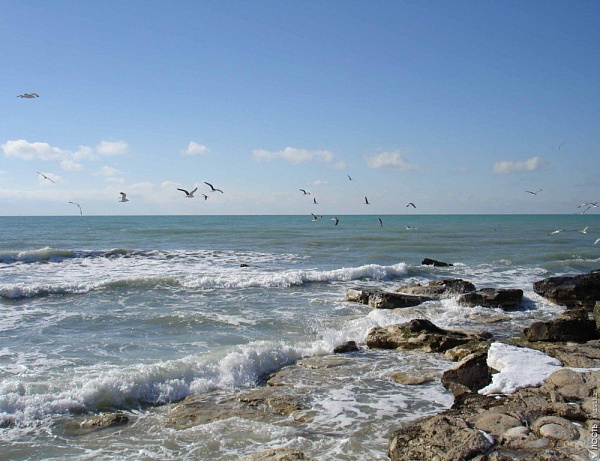
The First International Environmental Forum of Caspian States, titled “On the Wave of the Caspian” was successfully held in the capital of Dagestan. This significant event brought together the leading environmental scientists, parliamentarians, government representatives, business leaders, and students from all five Caspian region countries: Russia, Azerbaijan, Iran, Kazakhstan, and Turkmenistan. The forum was organized by the Compass Environmental Initiative Support and Development Foundation, Dagestan State University, and the Association of State Universities and Research Centers of the Caspian States. The event received support from NaftaGaz, which has been a partner of the Compass Foundation for three years in the implementation of the scientific program dedicated to monitoring and studying the Caspian seal.
The main aim of the forum was to strengthen cross-border cooperation to address the accumulated environmental issues of the Caspian Sea — a unique yet highly vulnerable body of water, facing such challenges as rapid water level decline, mass die-offs of the endemic species, pollution, and technology-related risks.
Uniting Efforts – the Only Way Forward
Dmitry Kobylkin, the Chairman of the State Duma Committee on Ecology, addressed the participants with a welcoming speech:
“For the first time, the scientists, parliamentarians, ecologists, and young researchers from Russia, Azerbaijan, Iran, Kazakhstan, and Turkmenistan gathered in one venue for an open dialogue. The problems of the Caspian can only be solved collectively by uniting scientific potential and political will of all the five Caspian countries.”
Murtazali Rabadanov, the Rector of Dagestan State University, called the meeting strategically important:
“The forum will become an effective platform for making strategic decisions regarding the development of the entire Caspian basin. In today’s reality, this field is critically important.”
Amirkhan Amirkhanov, the Adviser to the Head of the Federal Service for Supervision of Natural Resources (Rosprirodnadzor), emphasized the need for the immediate joint actions:
“To be effective, the Caspian countries need to balance the environmental standards. This will truly protect the sea rather than work in isolation. We support the idea of creating a unified Caspian monitoring system — a tool that will provide a complete picture of what’s happening in the water area.”
The Caspain Seal as an Indicator of a Catastrophe
One of the most urgent topics discussed was the critical situation with the Caspian seal — an endemic species, the population of which is rapidly decreasing. The recent mass die-offs and drop-outs of the dead animals on the coast of Dagestan and Kazakhstan confirm the need for the urgent measures.
Tatyana Kovaleva, the Director of the Compass Ecological Foundation, noted:
“Since 2023, Compass has been implementing a scientific program to study and conserve the seal’s population. We see that it is necessary to create an operational data exchange mechanism, coordinate methodologies, and develop practical response measures. Only joint observational system involving all the five Caspian states, will allow us to address problems effectively, not just record them, and prevent threats to the species.”
Alimurad Gajiev, the Head of the scientific group at Compass and Vice-Rector of Dagestan State University, supported the importance of such measures:
“The key elements should include establishing a unified monitoring system for the seal population, standardizing accounting and diagnostic techniques, and creating mechanisms for the operational response. Today, the Caspian seal is a barometer of the entire sea’s health. Without a joint observation system, we risk losing much more than just one species.”
An international expert Amir Sayed Shirazi, the Director of the Iranian Rehabilitation Center for the Caspian Seal Conservation, stressed that all the efforts should aim to prevent the species' disappearance.
Sea Level Decline: Economic and Environmental Consequences
Another central issue was the decline in the Caspian Sea’s water level, which has far-reaching environmental and economic implications for the entire region. Rumil Yunosov, the Head of the Environmental Department of Astrakhan Region, detailed the scope of the challenge:
“The water level significantly impacts the region’s economy — industry, agriculture, and fishing. A comprehensive program to study the changes in the Caspian’s level and minimize their consequences is being developed according to the order of the Russian President. We believe that the scientific community involvement will help create effective solutions. This program is needed not only for Russia, but for all the Caspian countries.”
Proposals and Resolutions: From Words to Action
During the plenary sessions and round tables, the participants formulated certain initiatives. The primary proposal was to establish an International Inter-Parliamentary Environmental Commission for the Caspian. As Dagestani parliamentarian Daitbek Saypov noted:
“Creating such a commission will help us transition from episodic contacts to systematic cooperation and the development of unified approaches to the marine protection.”
Additionally, a comprehensive environmental strategy “Caspian-2030” was announced, covering monitoring, biodiversity conservation, pollution control, and adaptation to the sea level changes. The Deputy Prime Minister of Dagestan, Nariman Abdulmutalibov, supported the idea, emphasizing the timeliness of the forum.
Business’ Voice: Responsibility and Practical Assistance
The forum gained particular importance with the participation from the responsible business representatives. NaftaGaz, a partner of the Compass Foundation in the Caspian seal conservation program, co-organized the event.
Varvara Paal, the company’s Director for Public Relations, stated:
“For NaftaGaz, which operates closely with the environmental issues across its facilities, supporting such a dialogue is a logical and important step. The forum demonstrated a very high level: we heard not just problem statements, but also in-depth reports proposing certain solutions. It’s invaluable that the scientists from different countries could meet, exchange data, and develop a common position. It’s now crucial that this professional, evidence-based voice reaches the highest levels of decision-making, influencing policies and economic actions across the Caspian region.”
Conclusion: The Start of a Long Journey
The First International Environmental Forum of the Caspian States successfully laid a solid foundation for the future collaboration. Specific mechanisms were outlined, such as creating an inter-parliamentary commission and establishing a unified monitoring system. The participants unanimously agreed that the environmental wellbeing of the Caspian is a common responsibility that requires ongoing dialogue, open information exchange, and resource consolidation among the science, government, and business sectors.
